
Category: alternative medicine

Why Patients Use Alternative Medicine

Complementary and Alternative Medicine are those medical practices not commonly used, accepted, or available as part of conventional Western medicine , however have been extensively used for thousands of years in different cultures. This brochure is designed to offer an outline of CAM and very briefly describe a few of the many alternative practices and systems obtainable and gaining reputation within the US. But there was an article that I read in 2007 within the British Medical Journal that principally talked about that as early as 1997, Merck knew that Vioxx might improve blood clots. But once they utilized for its new drug application to the FDA in 1998, they didn’t do any studies, and there were nine of them, to judge cardiovascular risk. They enrolled people who have been at low threat of heart illness, they usually did not actually have a standardized procedure to look at cardiovascular outcomes. The Sense and Nonsense of Alternative Medicine, Paul Offit takes goal on the $34-billion-a-year alternative medicine trade, which he says peddles therapies which may be unproven — and typically deadly. Victoria Maizes, of the Arizona Center for Integrative Medicine, agrees that some alternative therapies can hurt but argues that others are beneficial and have a spot in fashionable medicine.

alternative medicine

A study in Northern Europe shows that traditional medicine is available in half of Norwegian hospitals and a third of Danish hospitals, indicating a change of perspective towards these medicines. The rising reputation of other medicine is due largely to the growth of homeopathy. This 250-year-old science was developed within the late 18thcentury by the German physician and biologist, Dr. Samuel Hahnemann. The premise states that ‘like cures like.’ “In different words, a substance produces signs of sickness in a nicely person when administered in massive doses. If we administer the identical substance in minute …
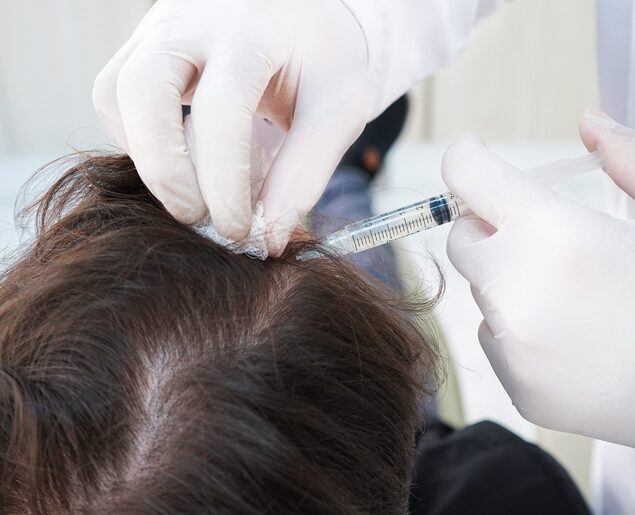

Mesotherapy for Hair Loss: What You Need to Know About Scalp Micro-Injections

The landscape of hair restoration has moved far beyond basic shampoos and traditional lotions. One emerging treatment at the forefront is mesotherapy – a method that delivers a blend of nutrients, vitamins, and compounds directly into the scalp through a series of fine, strategic micro-injections. But just what makes up these injections, and why are more men turning to this targeted solution for thinning or receding hair?

This guide shares key insights about mesotherapy, looking at the science behind the treatment, what you can expect during a session, and who stands to benefit the most.

What is Mesotherapy?

Mesotherapy was first developed in France during the 1950s by Dr Michel Pistor. Originally intended for pain management and circulatory issues, the procedure gradually found a new purpose in aesthetic medicine, especially for concerns like skin rejuvenation and, most recently, hair loss. The core idea is simple but powerful: instead of relying on topical products or oral supplements, which must pass through various biological barriers, key nutrients are injected straight into the scalp’s middle layer—where they can be absorbed with maximum benefit.

The targeted delivery means the hair follicles, often struggling for nourishment due to poor blood flow or other factors, can be revitalised effectively. Over the years, the formulations have become increasingly advanced, and the technique has evolved to be more comfortable and accessible, using very fine needles to ensure minimal discomfort.

Breaking Down the Mesotherapy Formula

A major benefit of mesotherapy is that it can be tailored to each client’s unique needs.Clinics offering mesotherapy for hair loss tailor their formulas and treatment plans to individual needs, ensuring the injections target the specific causes behind thinning or shedding, but they generally include a blend of ingredients proven to support scalp health and hair growth:

B-Complex Vitamins: These vitamins, including Biotin (B7) and Niacin (B3), are …

Embracing Change: A Practical Guide to Hair in Your 30s and 40s

Reaching your 30s and 40s can mean big changes. You’ve likely settled into your career, perhaps started a family, or simply grown into your true self. Yet, these decades also come with new experiences—like longer recovery times after a night out, that occasional creaky knee, and for many, the first signs of hair loss.

Noticing a receding hairline or thinner patches up top? You’re far from alone. Changes in hair with age are incredibly common, and they can take a lot of us by surprise. But here’s some good news: you’re not helpless, and hair loss doesn’t have to define how you view yourself.

Here’s your friendly guide to understanding what’s happening, accepting what you can’t change, and taking action where it matters.

Biology is at Play

Most men will experience some hair thinning by their mid-30s. It may happen earlier for some, or in gradual stages for others. By 50, about 85% of men will notice notable hair loss—a figure consistent whether you’re in Galway or Glasgow.

The main culprit is androgenetic alopecia, or male pattern baldness, driven largely by genetics and a hormone called DHT (dihydrotestosterone). DHT causes hair follicles to shrink, resulting in finer, shorter hairs—and eventually, no hair at all.

Understanding that hair loss is a natural part of biology (not something you caused) is the first step in reclaiming control.

Considering Stress, Diet, and Lifestyle

While DHT is a primary trigger, it’s not the only factor. Your 30s and 40s can bring increased stress—more responsibilities, job pressures, maybe sleepless nights if you have young children.

Stress can lead to telogen effluvium, a type of hair shedding caused by hormonal and nervous system changes. Diet is crucial too: insufficient iron, zinc, or vitamin D can affect hair health. And lifestyle choices that didn’t matter in your 20s—like skipping meals or …

Can Finasteride Truly Halt Hair Loss Permanently?

For many men, the reality of hair loss can appear much sooner than anticipated, sometimes even in their twenties. Often, it begins with slight changes: a hairline that starts to retreat, more strands clogging the shower, or a thinning area at the top of the scalp. Like men worldwide, Irish men may find these changes quietly impacting their confidence, sense of self, and overall wellbeing.

As awareness of men’s health issues has increased, so has the interest in treatment options. One name that frequently surfaces is finasteride. But can it truly halt hair loss permanently? And what does “permanently” even mean when dealing with a gradual and genetic condition such as male pattern baldness?

This article delves into the science of finasteride, how it operates, who it benefits, and why, while it may not be the miracle some hope for, it remains a significant aid to many.

The Core Problem: Understanding DHT 

To appreciate how treatments like finasteride work, it’s crucial to first understand the primary culprit behind most men’s hair loss: DHT, or dihydrotestosterone.

DHT is a hormone that derives from testosterone. While it’s essential during puberty and plays a role in male characteristics, it also attaches to hair follicles on the scalp in men who are genetically inclined to hair loss. Over time, DHT causes these follicles to shrink—a process known as follicular miniaturisation—leading to finer, weaker hair until the follicle ceases to produce visible hair.

Male pattern baldness, or androgenetic alopecia, results from this process. This is where finasteride proves beneficial.

The Functionality and Limitations of Finasteride 

Finasteride is a DHT inhibitor. By hindering the enzyme 5-alpha-reductase (which converts testosterone to DHT), it lowers DHT levels in the body. Reduced DHT equates to less harm to hair follicles, which helps to slow or even stop the progression of hair loss in …

Journal Of Different Complementary & Integrative Medicine

Casey covers the use of artificial intelligence in medicine and its underlying issues of safety, fairness, and privateness. Still, it’s essential for physicians to maintain an open thoughts, said Lang, the interim director of the Cleveland Clinic Wellness Institute. Many hospitals have additionally expanded into more common “wellness” offerings, with classes in wholesome cooking, tai chi, meditation, and artwork therapy. UCSF provides a $375 class on “cultivating emotional balance” (and a free class on “laughter yoga”). Mayo Clinic sells a $2,900 “signature expertise,” which includes consultations with a wellness coach.

alternative medicine

This is something that not even our present-day scientists can measure. The incapability to measure this notion of the ‘life force’ or ‘constitution’ has been one of the criticisms leveled at homeopathy. The different has been its use of substances that are poisonous of their pure state corresponding to arsenic but are medicinal and safe of their diluted kind such as Arsenicum Album, a widely known homeopathic remedy. One of the terms which is increasingly in style in western tradition is “wellness.” It is not solely a time period we see in in style magazines promoting day spas and on the cabinets of health meals stores; wellness is changing into a philosophy that is permeating western society.

Why Choose Duke Integrative Medicine

A study in Northern Europe shows that traditional medicine is available in half of Norwegian hospitals and a 3rd of Danish hospitals, indicating a change of angle towards these medicines. The growing recognition of alternative medicine is due largely to the expansion of homeopathy. This 250-year-old science was developed in the late 18thcentury by the German doctor and biologist, Dr. Samuel Hahnemann. The premise states that ‘like cures like.’ “In other words, a substance produces symptoms of illness in a well person when administered in giant doses. If we administer the same …